Organoid Vending Machine (2026)
with Jan Zuiderveld, in collaboration with FinalSpark
“Nishimura’s Gakutensoku imagined a convergence of the natural and the technological: an artificial creature inspired by the organic world. Karel Čapek’s robots followed a similar logic, conceived as synthetic living beings. Seen from this perspective, synthetic biology and intelligence-in-a-dish may be less a rupture than a return — technology coming back home to its biological nest.”
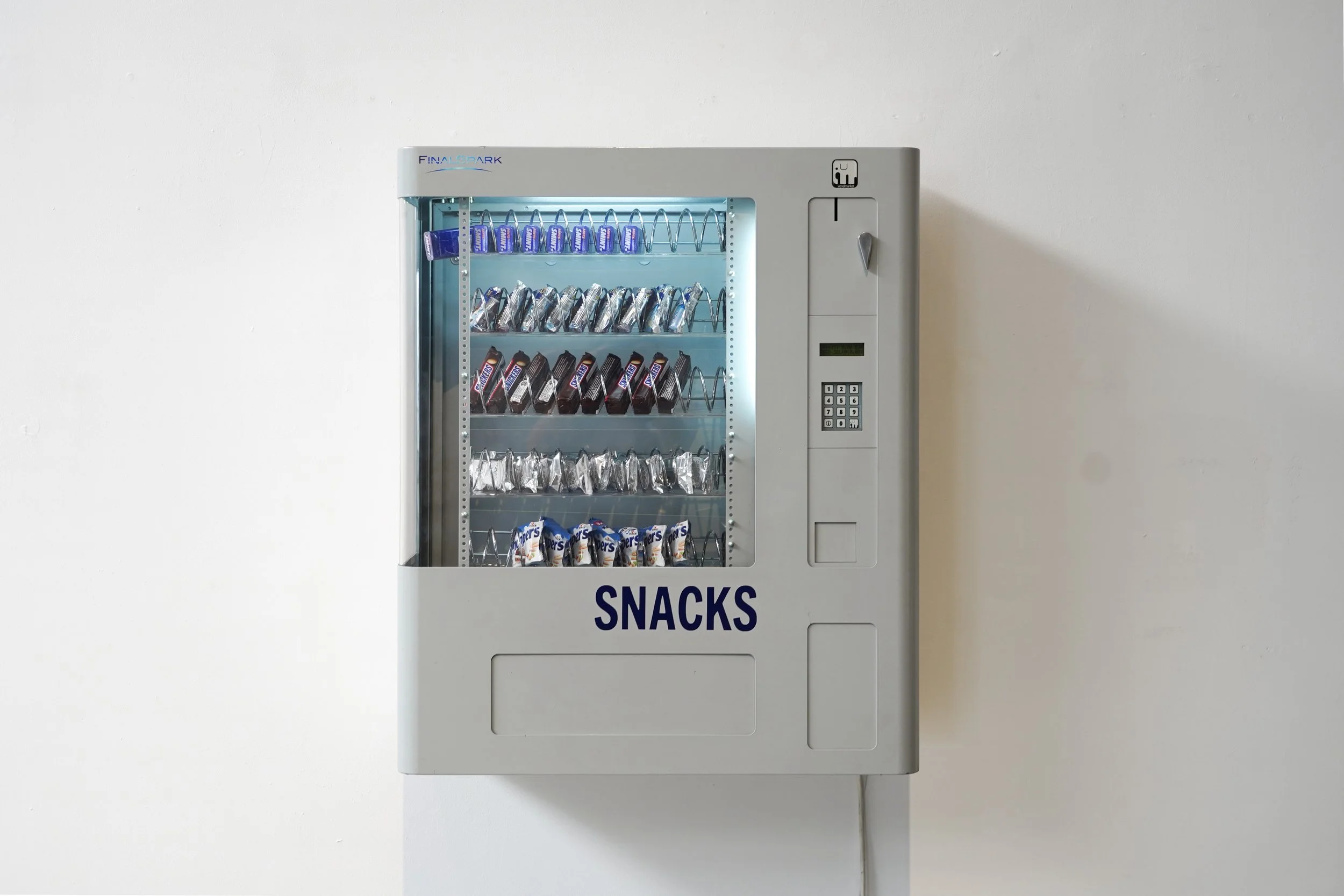
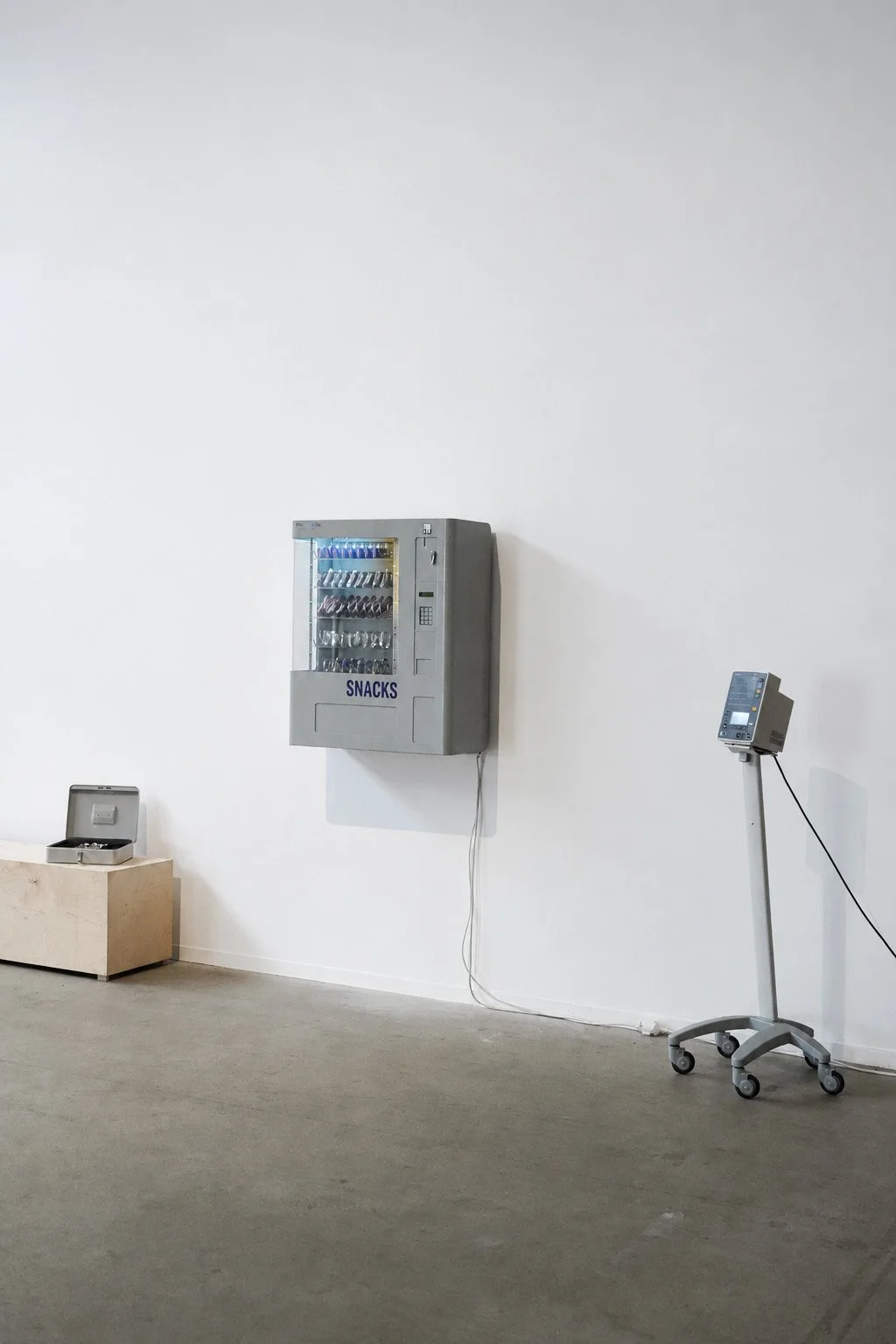
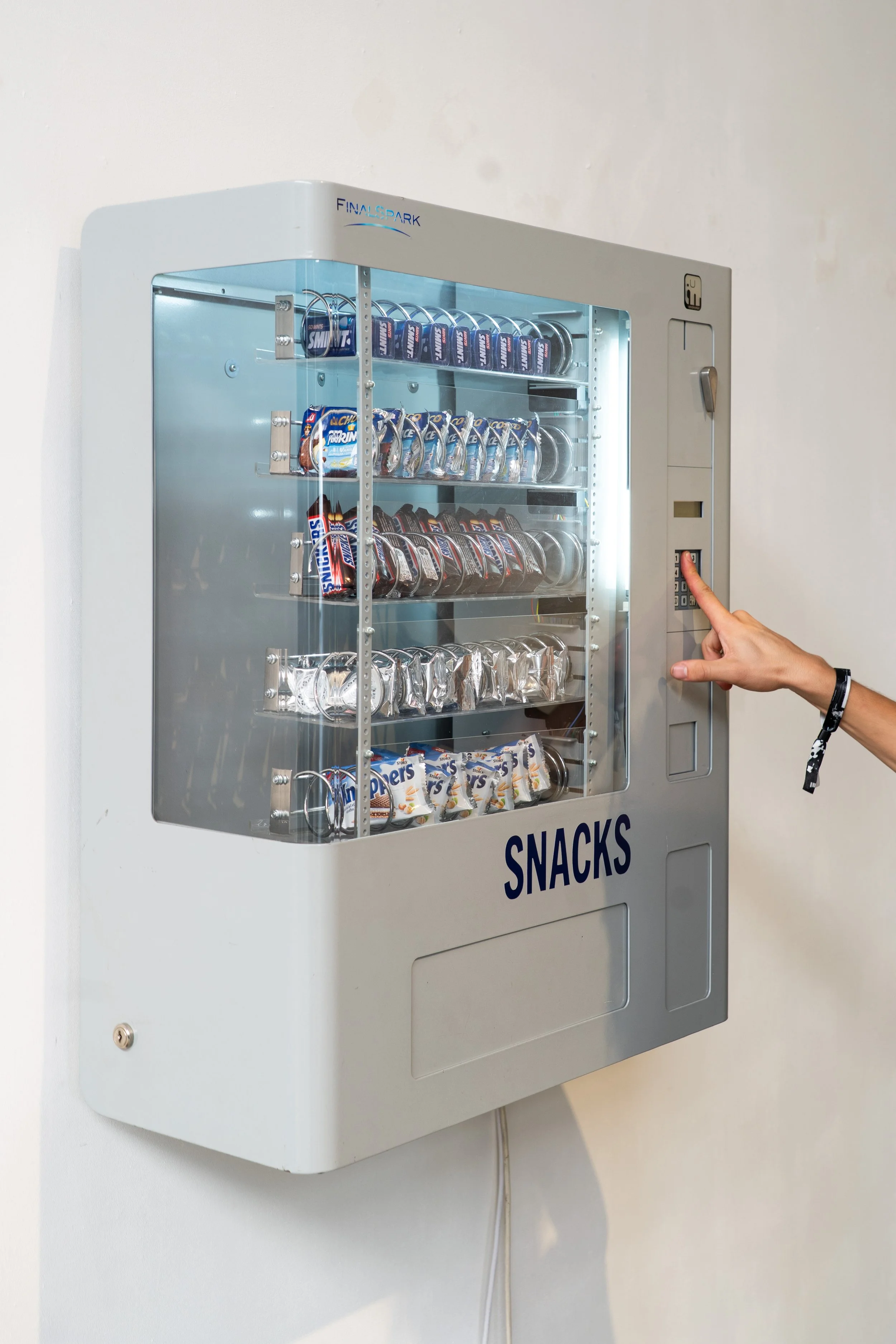
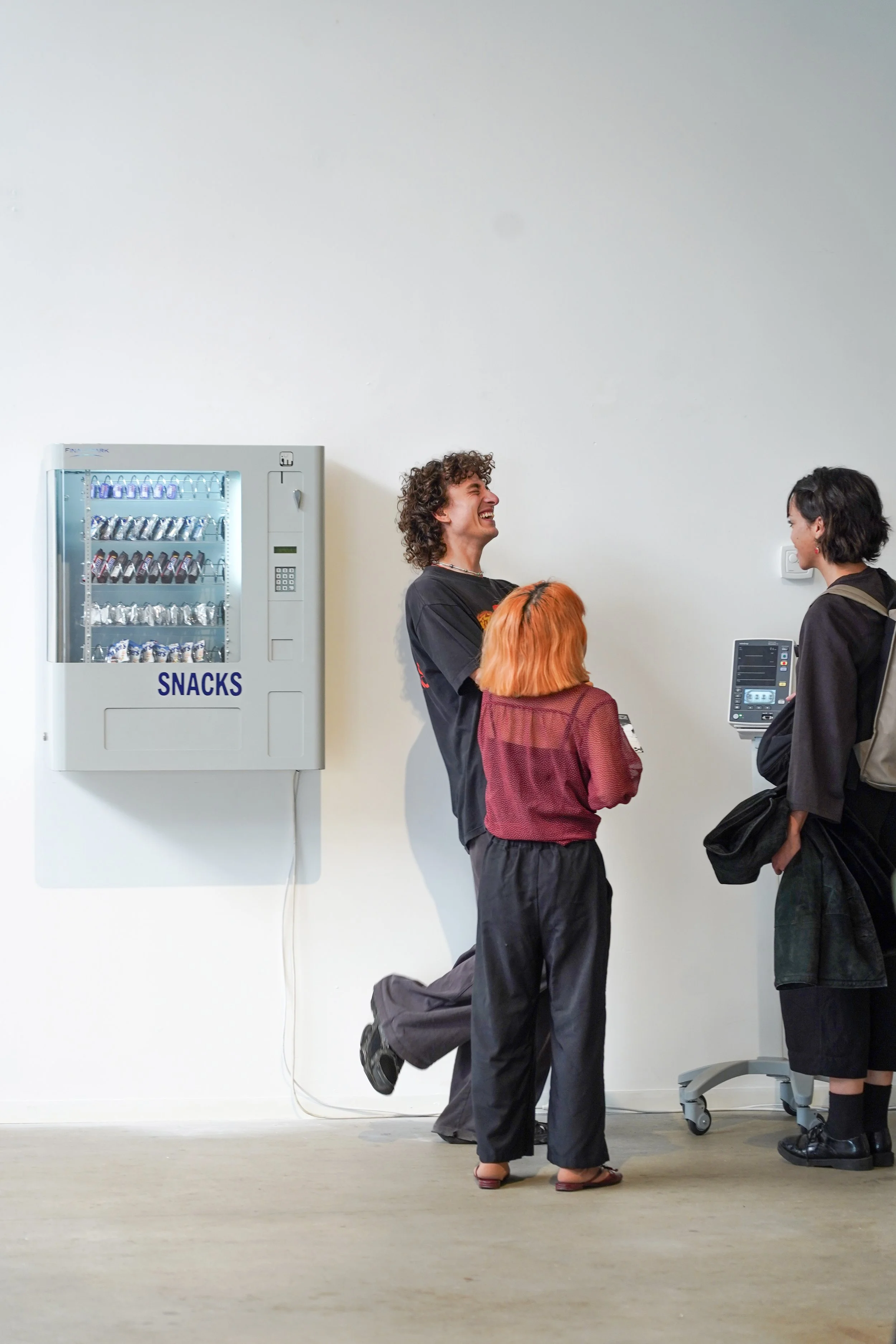
‘Organoid Vending Machine’ (2026) is an experiment in biological computation, replacing the predictable logic of a conventional vending machine with the fluctuating electrical activity of living human brain organoids. Grown from stem cells and interfaced with electrode arrays, the organoids perform functions such as registering credit, selecting products, and activating the machine’s motors.
Unlike silicon computers, biological neural networks are dynamic and unstable: their activity rises in response to stimulation, drifts over time, and gradually returns to baseline. In the vending machine, this means that credit is not permanently stored, but exists only for as long as the organoid remains sufficiently active. Retrieving a product becomes an interaction with the rhythms and temporalities of living tissue rather than with deterministic programmed logic.
By foregrounding these characteristics rather than engineering around them, the work explores what happens when living systems are asked to behave as computers. What kinds of technologies might emerge when computation becomes biological — responsive, variable, and alive? And how might our relationship with machines change when living matter becomes part of their infrastructure?